
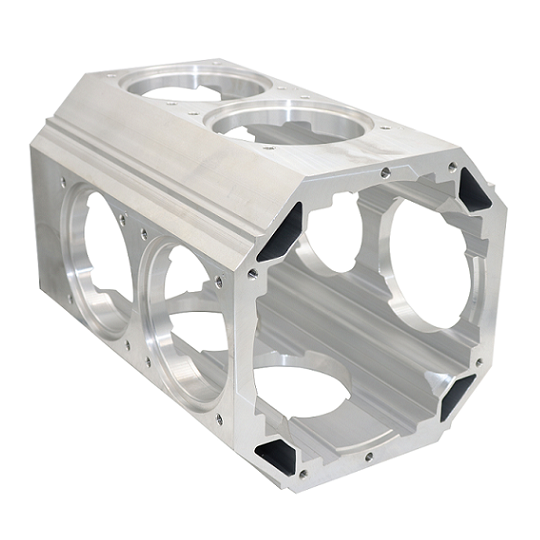
Industry 4.0 technologies are transforming CNC machining facilities into smart factories where machines, tools, and inspection equipment communicate through a digital network that enables real-time production monitoring, predictive maintenance, and lights-out manufacturing. The smart factory concept connects each CNC machine to a central production control system that tracks the machine status, the tool wear state, the material consumption, and the inspection results for every part produced. The data from the factory network is aggregated and analyzed to identify production bottlenecks, predict maintenance needs, and optimize the production scheduling across the entire facility. The measurable benefits of Industry 4.0 implementation in CNC machining include equipment utilization improvements of 15 to 25 percent, scrap rate reductions of 30 to 50 percent, and maintenance cost reductions of 20 to 30 percent. The cnc machined parts produced in smart factories are tracked from the raw material heat number through every machining operation to the final inspection result, providing full traceability that is increasingly required by aerospace, medical, and defense customers.
Lights-out manufacturing is one of the most significant Industry 4.0 trends in CNC machining. A lights-out factory runs CNC machines unattended during overnight shifts, with the parts loaded and unloaded by robotic arms or pallet changers that transfer workpieces between the machine tool and the storage system. The machines operate with automated tool wear monitoring that triggers a tool change when the cutting edge reaches a predetermined wear limit, and automated part inspection systems that verify the critical dimensions and flag non-conforming parts for operator review during the day shift. The lights-out production capability increases the machine utilization from 60 to 80 percent for single-shift operation to 80 to 95 percent for multi-shift operation with unattended overnight running. The investment for lights-out capability includes the robotic loading system at 50,000 to 150,000 dollars per machine, the automated inspection station at 30,000 to 80,000 dollars, and the production scheduling software at 20,000 to 60,000 dollars annually. For cnc turning services with bar-fed lathes, the lights-out capability is simpler to implement because the bar feeder automatically loads new stock when the previous part is completed, and the finished parts drop into a collection bin that does not require robotic unloading for the overnight shift.
| Technology | Investment | ROI Period | Benefits |
|---|---|---|---|
| Machine monitoring system | $5-15K per machine | 6-12 months | +15% utilization, predictive alarms |
| Robotic loading | $50-150K per cell | 12-24 months | Lights-out operation, +25% output |
| Digital twin simulation | $10-30K per seat | 6-12 months | -40% setup time, -50% prove-out |
| AI parameter optimization | $10-30K per system | 12-18 months | -20% cycle time, +30% tool life |
| Automated inspection | $30-80K per station | 18-30 months | -50% inspection labor, 100% data |
The digital twin technology in smart factories creates a virtual replica of the CNC machine tool that mirrors the physical machine in real time. The digital twin receives the same sensor data as the physical machine and simulates the cutting process, predicting the part quality outcome before the physical machine completes the cutting operation. The digital twin enables the production engineer to test alternative cutting strategies in simulation without taking the physical machine out of production, and to detect potential quality problems before they occur. The digital twin also serves as a training platform for new programmers and operators who can practice setting up and running the machine in the virtual environment without the risk of crashing the physical machine. The buttress thread calculator and similar specialized reference tools are being integrated into the digital twin environment, allowing the programmer to simulate the thread cutting operation for non-standard thread forms and verify that the tool path produces the correct thread profile before the physical cutting begins.
The workforce implications of Industry 4.0 in CNC machining include a shift from manual machine operation to system supervision and data analysis. The smart factory requires fewer operators to run the machines because the automated systems handle the loading and unloading, but requires more data analysts to interpret the production data and identify improvement opportunities. The technician skill set shifts from manual machine setup and operation to programming the robotic loading systems, configuring the machine monitoring software, and troubleshooting the network connections between the machines and the central control system. The training programs for the next generation of CNC professionals include data analytics, network security, and automation system configuration alongside the traditional machining and programming skills. The allen bolt size chart and other standard reference tables are being digitized into the CAM software database that the digital twin uses for automatic feature recognition and tool selection, reducing the reliance on the programmer individual reference knowledge for standard fastener specifications.